
Medical aid-in-dying pharmacology in the US has evolved from single-agent sedative protocols to multidrug regimens. The currently recommended combination of diazepam, digoxin, morphine, amitriptyline, and phenobarbital (DDMAPh) has improved reliability and reduced average times to death. However, patients with specific clinical characteristics—including opioid tolerance, gastrointestinal pathology, and younger age—remain at increased risk for prolonged deaths. To address this concern, some clinicians have adopted a higher-dose version of DDMAPh, although its effectiveness has not been established.
Dose Increase in Medical Aid in Dying: An Outcomes Comparison of Higher and Usual-Dose Prescriptions
Jessica Kaan, DO,(1), Angelique Loscar, MBA,(2), Lonny Shavelson, MD(3)
(1)Medical Director, End of Life Washington
(2)Director of Data Management and Analysis, Academy of Aid-in-Dying Medicine
(3)Director of Education, Academy of Aid-in-Dying Medicine
Journal of Aid-in-Dying Medicine, Issue 3, August, 2026


⠀
We conducted a retrospective analysis of 1,252 voluntary case reports submitted by DDMAPh prescribers to the Academy of Aid-in-Dying Medicine (Academy). Time-to-death outcomes were compared between usual-dose and high-dose DDMAPh in both the overall cohort and a subgroup of patients with one or more factors associated with prolonged deaths.
In the overall cohort, high-dose DDMAPh was not associated with shorter times to death. In the at-risk subgroup, however, the higher-dose regimen reduced mean time to death by 16.8% (158.5 vs. 190.4 minutes) and median time to death by 5.4% (70 vs. 74 minutes). The larger reduction in mean than median time suggests a greater effect on the longest deaths. The incidence of “outlier deaths” (>20 hours) was reduced by 77% relative to the usual-dose regimen. However, these differences did not reach statistical significance (p = 0.85).
Despite important limitations, including voluntary reporting, potential reporting bias, and retrospective study design, these preliminary findings suggest that high-dose DDMAPh may reduce the occurrence of prolonged and outlier deaths among patients at increased risk.
The available evidence is insufficient to support a formal recommendation for the higher-dose regimen. Additional studies, ideally with larger sample sizes and prospective designs, will be required to determine whether the observed trends represent a true clinical benefit. In the interim, clinicians may reasonably consider the higher-dose regimen on a case-by-case basis for selected at-risk patients.
Keywords: aid in dying, medical aid in dying, palliative care, physician-assisted suicide, assisted dying, pharmacology, DDMAPh

Over the past three decades, medical aid in dying has emerged in the US as a legally authorized clinical option for terminally ill patients with decision-making capacity [1]. While legal frameworks across participating jurisdictions have established procedural safeguards and eligibility criteria, the clinical practice of aid in dying has historically lacked a robust evidence-based pharmacologic foundation [2]. Prior to recent advances, clinicians relied on a variety of medication combinations consisting of sedatives with or without cardiotoxic agents, resulting in inconsistent reliability and wide variation in times to death [3–5]. These shortcomings were
reflected in occasional prolonged deaths lasting days, and a small number of patient awakenings with the earlier aid-in-dying protocols. Such outcomes created emotional distress for families and uncertainty during informed decision-making discussions with patients [2,6].
A major step toward addressing these knowledge gaps was the first comprehensive multi-database analysis of aid-in-dying medication protocols, published in 2025 in the Journal of Palliative Medicine. That study examined more than 3,300 death reports from 2009 through 2023, comparing four pharmacologic regimens using time to sleep and time to death as clinically meaningful outcomes [2]. Earlier medication protocols demonstrated substantial variability in performance, whereas the newest regimen—DDMAPh (diazepam 1 g, digoxin 100 mg, morphine 15 g, amitriptyline 8 g, and phenobarbital 5 g)—was associated with shorter average times to death and fewer extreme prolonged-death outliers. These findings suggested that DDMAPh improved the reliability of the aid-in-dying experience [2].
Despite these advances, subsequent analyses demonstrated that even with DDMAPh, certain clinical characteristics remained associated with longer times to death, particularly high pre–aid-in-dying opioid exposure or tolerance, significant gastrointestinal pathology, and younger age [2,7]. These findings suggested that a one-size-fits-all approach may not adequately address the needs of patients at increased risk for prolonged deaths.
In response, some prescribing clinicians began using a higher-dose version of DDMAPh, in which diazepam was increased from 1 g to 2 g and phenobarbital from 5 g to 10 g, while the remaining components were unchanged. They reasoned that a higher dose of the non-opiate sedatives might improve effectiveness in patients with opioid tolerance, and also increase gastrointestinal absorption. However, the clinical impact of this modified regimen had not been evaluated. To address this question, we analyzed 1,252 case reports submitted by clinicians and compared outcomes between usual-dose and high-dose DDMAPh.

Data Source and Study Design
We conducted a retrospective analysis of case reports voluntarily submitted through the Academy of Aid-in-Dying Medicine’s online reporting system [8]. Author A.L. accessed the de-identified database on January 1, 2026. The study period included reports submitted between June 27, 2024 to January 1, 2026, yielding a total sample of 1,252 cases.
Collected variables included date of submission, state of residence of the reporting clinician, date of patient death, terminal diagnosis, medication regimen
administered, route of administration (oral, rectal, or feeding tube), time to sleep, time to death, and the presence of factors associated with prolonged deaths. Risk factors were selected from a checklist of nineteen previously identified factors associated with longer times to death [7].
Outcome Measure
The primary outcome was caregiver-reported observed time to death. Timing began when the patient completed ingestion of the aid-in-dying medications. In the uncommon circumstance that a patient became unconscious before completing ingestion, timing began when the patient became unresponsive.
Because deaths occurred in non-monitored home settings, death was determined using bedside clinical criteria, specifically cessation of respirations and absence of detectable pulses.
• <2 hours (approximately 79%)
• 2 to <5 hours (approximately 15%)
• 5 to <10 hours (approximately 5%)
• 10 to <20 hours (approximately 2%)
• 20 hours (“outlier deaths,” approximately 1%)
Percentages are approximate and may not sum to 100% because of rounding.
Medication Regimens
The two medication protocols evaluated were:
Usual-dose DDMAPh
• Digoxin 100 mg
• Diazepam 1 g
• Morphine 15 g
• Amitriptyline 8 g
• Phenobarbital 5 g
High-dose DDMAPh
• Digoxin 100 mg
• Diazepam 2 g
• Morphine 15 g
• Amitriptyline 8 g
• Phenobarbital 10 g
All medications were compounded from pure pharmaceutical powders and mixed into a suspension of approximately 2–4 ounces, typically using water or filtered apple juice.
Statistical Analysis
Descriptive statistics were calculated using Microsoft Excel and are reported as mean ± standard deviation (SD) and median (interquartile range [IQR]). Analyses focused on patients with one or more risk factors for prolonged deaths who received either the usual-dose or high-dose regimen.
Comparisons between usual-dose and high-dose DDMAPh were performed using the Mann–Whitney U test in JASP (version 0.95). Statistical significance was defined as a two-sided p value <0.05.
Given the retrospective nature of the dataset and the relatively small number of observations within some outcome categories, particularly prolonged-death outliers, analyses were limited to univariate comparisons. Multivariable adjustment for potential confounding variables was not performed because of insufficient sample sizes within individual risk-factor subgroups.
Results
A total of 1,252 reports were available for analysis from the Academy database, spanning June 27, 2024 through January 1, 2026. Of these, 1,191 reports (95.1%) included information regarding the presence or absence of factors previously associated with prolonged deaths.
All Patients
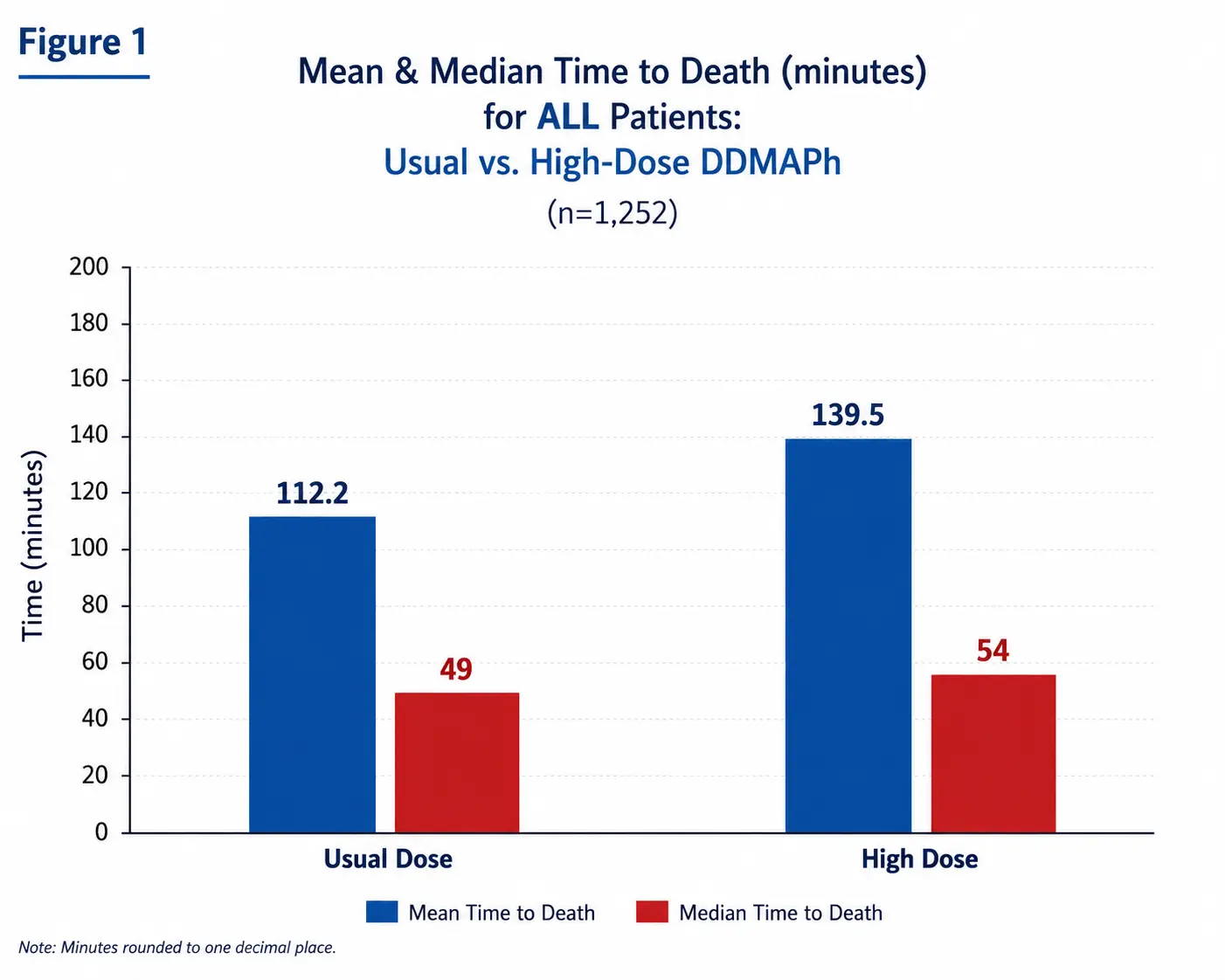
Figure 1 summarizes time-to-death outcomes for all patients receiving either usual-dose or high-dose DDMAPh, regardless of risk-factor status.
Among all patients, the mean time to death was 112.2 minutes and the median time to death was 49 minutes for usual-dose DDMAPh. For high-dose DDMAPh, the mean and median times to death were 139.5 and 54 minutes, respectively. Mean time to death for high-dose was 24.3% longer than for the usual dose.
Thus, in the overall cohort, the high-dose regimen was not associated with shorter times to death, but rather longer times.
Patients with One or More Factors Associated with Longer Deaths
Figure 2 presents outcomes for patients with at least one reported factor associated with prolonged deaths. Among these patients, 313 received usual-dose DDMAPh and 211 received high-dose DDMAPh.
For patients receiving usual-dose DDMAPh, the mean time to death was 190.4 minutes and the median was 74.0 minutes. For patients receiving high-dose DDMAPh, the mean and median times to death were 158.5 and 70.0 minutes, respectively.
Compared with usual-dose DDMAPh, the high-dose regimen was associated with a 16.8% reduction in mean time to death (158.5 vs. 190.4 minutes) and a 5.4% reduction in median time to death (70.0 vs. 74.0 minutes).
Mean time to death for patients with one or more reported factors associated with longer deaths was 20.1% greater for those treated with usual-dose compared to those treated with high-dose DDMAPh. Median times, however, were similar for both dosage groups. However, the difference in time to death between the two groups was not statistically significant (p = 0.85).
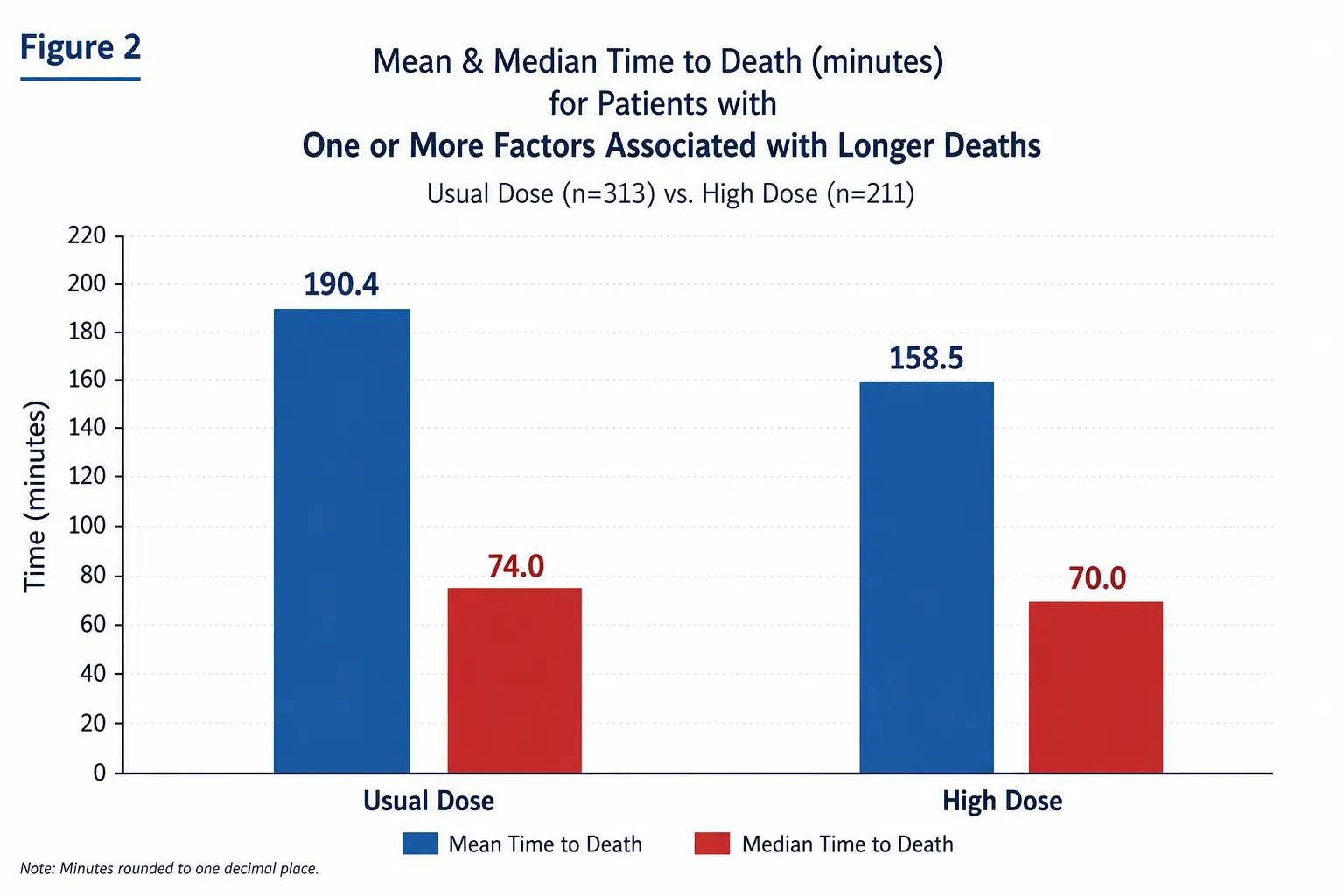
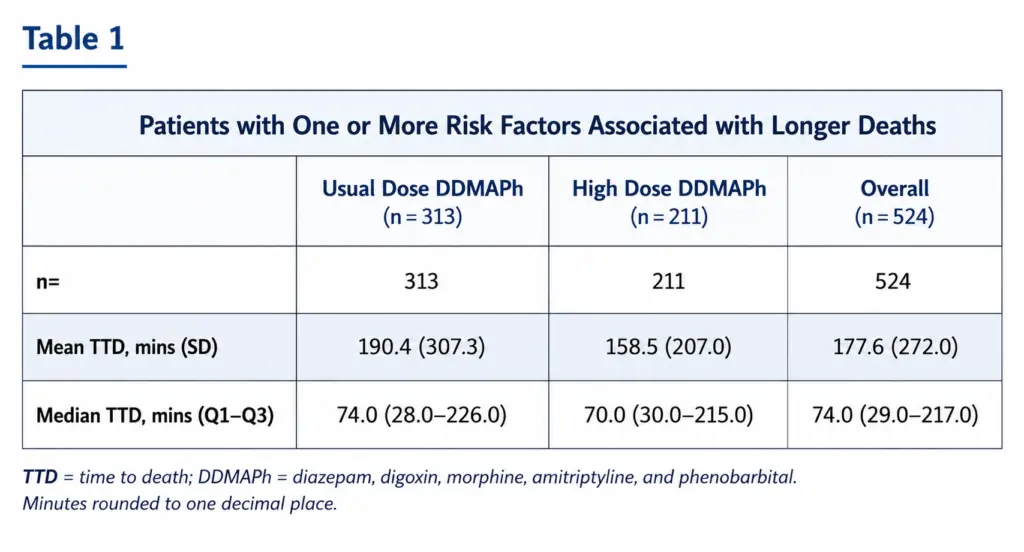
Table 1 summarizes descriptive data for patients with one or more factors associated with prolonged deaths.
Time to Death by Patient Characteristics
Table 2 summarizes the distribution of time-to-death categories among patients with one or more factors associated with prolonged deaths.
The distributions were similar between dose groups for deaths occurring within 20 hours. For deaths occurring within 2 hours, proportions were 62.9% for usual-dose DDMAPh and 61.6% for high-dose DDMAPh. Corresponding proportions for the 2–5 hour, 5–10 hour, and 10–20 hour categories were likewise similar between groups.
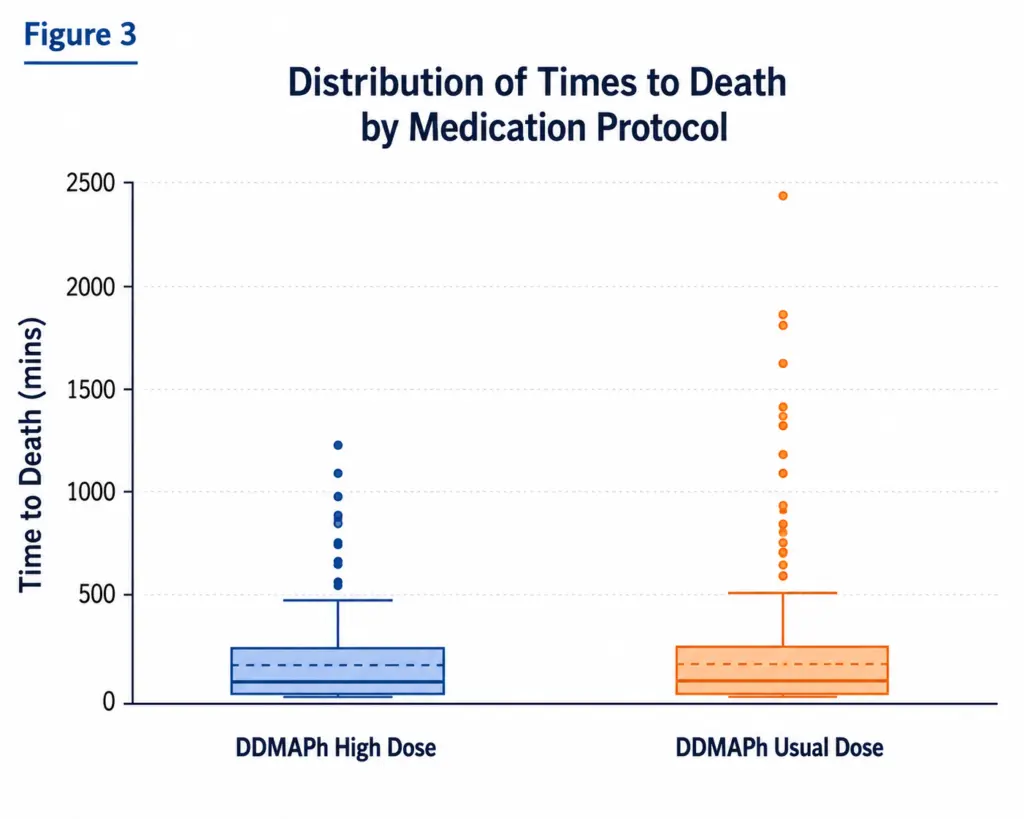
The largest difference was observed among deaths exceeding 20 hours. Outlier deaths (>20 hours) occurred in 7 of 313 patients (2.2%) receiving usual-dose DDMAPh and in 1 of 211 patients (0.5%) receiving high-dose DDMAPh. This was a 77% relative risk reduction.
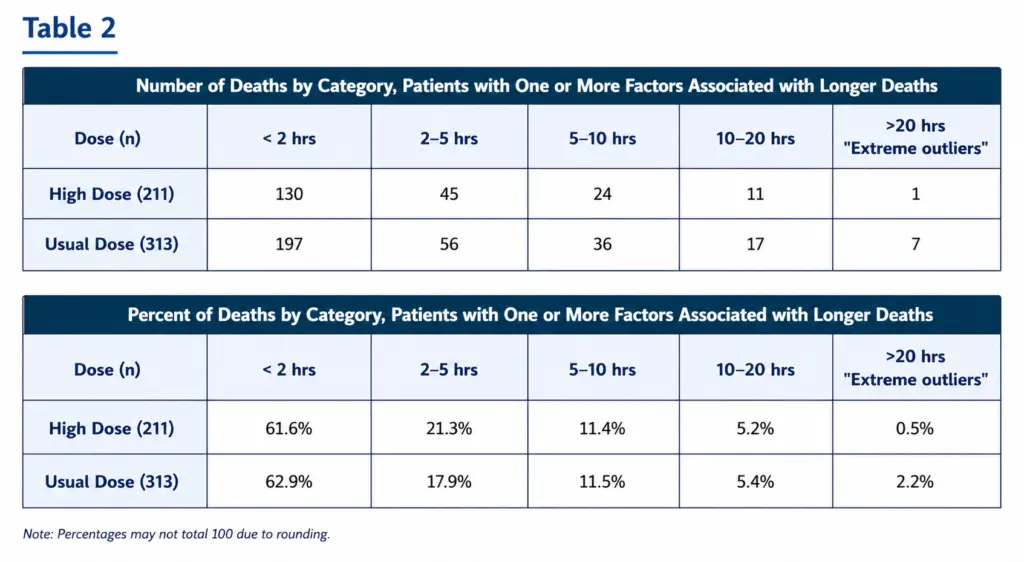
Figure 3 is a graphic illustration of the data in Table 1, showing the distribution of times to death for high-dose DDMAPh vs. usual-dose DDMAPh for patients with one or more factors associated with longer deaths. It illustrates the “shortened tail” effect of high-dose DDMAPh’s association with fewer long outlier deaths.

Since the first medical aid-in-dying prescriptions were written in Oregon in 1997, aid-in-dying pharmacology has evolved substantially. Understanding that evolution provides context for the findings of this study.
In all US jurisdictions where medical aid in dying is legal, patients must self-administer medications through the gastrointestinal tract; injections are prohibited. [9] This requirement creates a fundamental pharmacologic challenge. Reliable absorption of large medication doses is inherently less predictable through the gastrointestinal tract than by intravenous or
other injection methods, particularly in terminally ill patients, who often have impaired gastrointestinal function (mucosal/villous atrophy, peristaltic insufficiency, and vascular supplies compromised by hypotension). Efforts to improve the reliability and predictability of aid-in-dying medications have focused on overcoming the limitations of gastrointestinal delivery.
For nearly two decades, clinicians primarily prescribed a large oral dose of secobarbital. [5] Although median times to death were generally satisfactory (approximately 24 minutes), prolonged deaths lasting up to 3.5 days occasionally occurred, and five documented patients regained consciousness after ingestion. [5] These uncommon but highly distressing outcomes highlighted a persistent challenge: reducing the frequency of extreme outlier deaths. With advances in aid-in-dying pharmacology, there have been no reports of patients awakening with DDMAPh, and outlier deaths are much less frequent and shorter in duration. But they have not disappeared.
A major advance occurred around 2015–2016, when clinicians in Washington introduced multidrug protocols that combined sedative and cardiotoxic medications. By targeting both respiratory and cardiac mechanisms, these regimens were associated with fewer prolonged deaths than earlier single-agent approaches. The Academy of Aid-in-Dying Medicine initiated a national database, which has supported ongoing refinement of aid-in-dying pharmacology and the evolution of newer regimens, including DDMAPh (in partnership with state organizations, particularly End of Life Washington and End of Life Choices Oregon).
The present study extends that effort by evaluating whether increasing the doses of diazepam and phenobarbital within the DDMAPh protocol might further reduce prolonged and outlier deaths among patients at increased risk for delayed times to death.
We found two prescribing patterns for high-dose DDMAPh.
• Clinicians prescribing the high-dose regimen for all of their patients.
• Clinicians prescribing the high-dose regimen only for patients with clinical factors known to be associated with longer deaths. (They prescribed the usual dose for their other patients.)
As illustrated in Figure 1, prescribing high-dose DDMAPh for all patients (with or without factors associated with prolonged deaths) paradoxically resulted in longer times to death than using the usual dose. The mean time to death with usual-dose equals 112.2 minutes vs high-dose 139.5. Median time was 49 vs 54, respectively.
At first inspection, the all patients cohort results appear inconsistent with the rationale for high-dose DDMAPh — patients receiving the higher dose regimen had longer times to death than those receiving the usual dose. Why would a higher dose be less effective than a lower dose? The all patients cohort included reports from clinicians who prescribed high-dose DDMAPh only to patients with clinical factors known to be associated with prolonged deaths — often opiate tolerance and/or intestinal absorptive/transport dysfunction. Times to death for this more severely ill group skewed the high-dose data toward longer deaths, when compared to the usual-dose group.
What is learned from the data described in Table 1 is that there is no evidence-based rationale for prescribing high-dose DDMAPh to all patients, as some clinicians have been doing.
The question, then, is whether the evidence confirms a rationale for prescribing high-dose DDMAPh only to patients with clinical factors associated with longer deaths. That’s where the paradoxical data from the all-patient cohort gets turned on its head. High-dose DDMAPh, when given only to patients with factors associated with longer deaths showed, on average, quicker deaths with increased reliability (fewer outliers).
For that subgroup, the mean time to death was usual dose 190.4 minutes, high dose 158.5 — a 16.8% improvement. For example, the time-to-death decrease of a 5-hour death would be to 4.2 hours utilizing the high dose regimen. This incremental reduction in time to death, however, is not a meaningful improvement for most clinicians, patients, or families.
But the goal of using high-dose DDMAPh was not to decrease the low- or mid-range times to death, it was to bring in the prolonged-death outliers, those most burdensome for loved ones present at the vigil.
The larger reduction in mean than median time to death suggests that the potential benefits of high-dose DDMAPh occur primarily among patients with the longest times to death. This interpretation is reinforced by the lower proportion of deaths exceeding 20 hours in the high-dose group (0.5% vs. 2.2%).
The relative risk reduction for a >20-hour death was 77% when using high dose. However, since long-outlier deaths are, by definition, uncommon, this trend was based on only eight patients. This finding, given its limited data set, did not reach statistical significance. But the potentially encouraging trend warrants further investigation with larger sample sizes.
It is important to note that there have been no reported cases of patients regaining consciousness after taking DDMAPh (whether usual or high dose) [5].
This study was underpowered for definitive conclusions. Given the constraints of this retrospective, voluntary reporting system, the data should be interpreted in light of the limitations. At this time, the data suggests:
• Prescribing high-dose DDMAPh for all patients is not indicated.
• Prescribing clinicians may consider high-dose DDMAPh for a subgroup of patients with known factors associated with longer deaths, as a way to reduce the risk of extreme outliers.
Prescribing high dose DDMAPh should also take into account practical trade offs. Some compounding pharmacies charge more for the higher dose, adding roughly $50 to the usual-dose price (typically $400-950). The larger suspension volume (3 vs. 2 ounces) may be harder for patients with swallowing difficulties or taste aversion. These factors should be incorporated into shared decision making with patients and families.

This study has important limitations. It is a retrospective analysis of a voluntary national reporting system lacking randomization, so reporting bias and confounding by indication are possible, if not likely. Since state-based mandatory reporting systems only provide aggregate data, our analysis draws on the most comprehensive dataset currently available. The high dose subgroup is relatively small, limiting statistical power; the non significant p value (0.85) indicates that chance remains a plausible explanation for the observed differences.
We also lacked sufficiently granular data to adjust for comorbidities, quantify opioid
tolerance precisely, or to account for other potential confounders. These limitations highlight the need for larger, prospectively designed studies that pre specify high risk criteria, standardize dosing and reporting, and incorporate formal power calculations. Until such data are available, our findings should be interpreted as early, practice informed possibilities rather than definitive proof.

In this retrospective analysis of 1,252 aid-in-dying case reports, use of high-dose DDMAPh was not associated with shorter times to death in the overall patient population. Among patients with one or more factors previously associated with prolonged deaths, however, high-dose DDMAPh was associated with shorter mean times to death and a lower frequency of extreme outlier deaths (>20 hours).
Because these findings did not reach statistical significance and derive from a voluntary retrospective reporting system, they should be considered hypothesis-generating rather than definitive.
Current evidence does not support routine use of high-dose DDMAPh for all patients. However, while additional data are collected, clinicians may reasonably consider the higher-dose regimen for selected patients at increased risk for prolonged deaths.
Future studies with larger sample sizes and prospective designs will be necessary to determine whether high-dose DDMAPh provides a meaningful clinical benefit.
The authors encourage clinicians to submit aid-in-dying case reports to the Academy of Aid-in-Dying Medicine database [8] to support continued evaluation and improvement of aid-in-dying pharmacology.
Acknowledgments: Our gratitude to Susan Hughes, MS, for her assistance with statistical calculations.
Disclosures: All authors have no financial or other conflicts of interest. No funding was received by any organization for the submitted work.

- Medical aid in dying: Ethical and legal issues – UpToDate. Accessed: February 22, 2026. https://tinyurl.com/UTDEthicalLegal.
- Macmillan P, Hughes S, Loscar A, Shavelson L: The Pharmacology of Aid in Dying: From Database Analyses to Evidence-Based Best Practices. Journal of Palliative Medicine. 2025, 28:492-8. https://pubmed.ncbi.nlm.nih.gov/39874553/
- Blanke C, LeBlanc M, Hershman D, Ellis L, Meyskens F: Characterizing 18 Years of the Death With Dignity Act in Oregon. JAMA Oncol. 2017, 3:1403-6. https://pubmed.ncbi.nlm.nih.gov/28384683/
- The Pharmacology of Aid in Dying, and a Red Flags Update. Academy of Aid-in-Dying Medicine. Accessed: February 22, 2026. https://www.aadm.org/courses/the-pharmacology-of-aid-in-dying-and-a-red-flags-update.
- Oregon Health Authority : Death with Dignity Act Annual Reports : Death with Dignity Act : State of Oregon. (2025). Accessed: 02/22/2026: https://www.oregon.gov/oha/ph/providerpartnerresources/evaluationresearch/deathwithdignityact/pages/ar-index.aspx.
- Kaan J: Clinician-Patient Informed Decision-Making Discussions for Aid in Dying. Journal of Aid-in-Dying Medicine. 2024, 2:60-72. https://heyzine.com/flip-book/2ce721e795.html#page/60
- Factors Associated with Longer Deaths. Academy of Aid-in-Dying Medicine. Accessed: February 22, 2026. https://www.aadm.org/courses/redflags.
- Aid-in-Dying Case Data Filing. (2026). Accessed: 03/18/26: https://www.aadm.org/aid-in-dying-case-data-filing.